Movies, books, music and TV

Category: General Page 225 of 271

“Finding Nemo”: An Appreciation

Underwater, and abovewater, seascapes abound and offer much in the Pixar cartoon feature, Finding Nemo (2003).  I couldn’t catch everything the fast-talking sea creatures said, but I saw the sights.

Triple-colored clown fish suspended (floating) above the anemone, legions of pink, transparent jellyfish filling the frame, a distant white light and the distant underside of a boat in depths either dim or utterly black, a scary overhead shot of greedy sea gulls beginning to cover the wooden dock on which two appetizing fish out of water lay.

Really, human-like fish are a puny subject for a narrative movie, but Nemo reminds us that a strange and fascinating underwater world is there.  I have no interest in the script, one which children will enjoy, but was indeed turned on by the visual beauty and thrills.
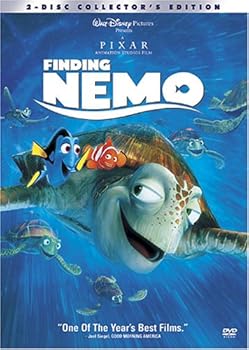
Cover of "Finding Nemo"

Cover of Finding Nemo

“Diary Of A Country Priest” Is Robert Bresson’s Best Movie

Decades ago Robert Bresson turned a great novel by Georges Bernanos—Diary of a Country Priest—into a great film (1950).

Is there suffering in the priestly life?  There can be, yes—plenty of it—and there is for the country padre (Claude Laydu) in this work.  Along with being dissatisfied with himself and his service to God, he has come down with stomach cancer.  Apropos of service to God, the priest is put to the test by people who are far from the Lord, by rebels, albeit a rebel like Chantal (Nicole Ladmiral) suffers too.  Like the priest, she is rejected.

In any event, the world does not understand the Christian.  Even in a country village a priest is but a stranger and a pilgrim, to use biblical language.  But locations in what is (in various ways) a cancer-ridden world do not matter, for Grace, the film tells us, is everywhere.

(In French with English subtitles)


Diary of a Country Priest

Diary of a Country Priest (Photo credit: Wikipedia)

“Mean Girls” Is Simply Good Entertainment

Mean Girls

Mean Girls (Photo credit: Wikipedia)

To me, Mean Girls (2004), which is ten years old this year, contains too much plot, but that’s not much of a fault.  What’s more, the third time I saw it I thought the jokes were inadequately paced, but with a fourth viewing I realized they actually aren’t.  So Tina Fey’s farce is delightfully watchable, an effective Hollywood comedy for once.  Fey knows how to write one-liners—edgy, politically incorrect ones—and Mark Waters’s direction never drags them down.  Plus the actors’ delivery of them is flawless. 

A certain cognitive dissonance is created because Lindsay Lohan, the movie’s star, is likable, rather sweet, and we never would have expected the moral meltdown we later got from her.  Her acting is spot-on, bearing the kind of pull that makes us miss her when she’s not on screen.

Nifty Art: The Film “Crazed Fruit” (1956)

Crazed Fruit is a Japanese film about young people living in Japan at the time the picture was made: the mid-1950s.

Predictably, the kids here distrust their elders and are cynical about their country.  Rather than being instruments of the change they think there ought to be, however, they merely do what is ordinary in every young person’s life:  they fall in love.  That is to say, Haruji (Masahiko Tsugawa) falls for perfidious 20-year-old Eri (Mie Kitahara), who is all but stolen from him by Haruji’s older brother Natsuhisa (Yujiro Ishihara), and it all goes very badly.  The fruit of all this love is crazed; hence the film’s title.

Vigorous and disturbing, CF was directed, not always conventionally, by Ko Nakahira and written by Shintaro Ishihara.  The direction produces a film which is just as much a work of art as Rashomon or Tokyo Story.  Its images are as steely as a bayonet.

(In Japanese with English subtitles)

“Going Places” Simply Nose Dives

The notorious French film about two overgrown boys, worthless, who would rather steal than work and whose toys are women, Going Places (1974) has something to say about the spiritual and emotional  malnourishment whose results are degradation and drift.  But in addition to having a precarious screenplay, the film has a writer-director, Bertrand Blier, who can’t quite hide his basic misogyny any more than he wishes to hide footage of objectionable excess.

Blier is excessive about three things:  female stupidity, sex, and—remember the French actress Miou-Miou, who’s in this movie?—showing Miou-Miou’s naked breasts.  It’s an early Seventies film, all right.

(The photo is of Bertrand and Miou-Miou)


English: Director of photography Bertrand Blie...

Page 225 of 271

Powered by WordPress & Theme by Anders Norén