Movies, books, music and TV

Category: General Page 105 of 271

“The Cat’s Paw” With Lloyd The Talker

Harold Lloyd knew how to play an innocent, as in The Cat’s Paw (1934), and here he is the son of a missionary in China, one wishing to perpetuate his father’s work by returning to Stockport, California, the place of his birth, in order to marry and produce offspring.  But the toxic political machine in Stockport seizes the Lloyd character—Ezekiel Cobb—to render him a straw candidate for mayor with the expectation that the machine’s reprobate candidate (a good Alan Dinehart) will win.  Cobb, however, comes across as a “regular guy” and he wins.  Subsequently he learns perfectly how unsavory men can injure him, and vigorously he fights them not only for his own good but also for the city’s good.

This is a Harold Lloyd talkie, consisting of lively set pieces, likable wit, and respectable acting.  Once the funny moments begin to subside, even so, the movie’s pace drags a bit; and yet Lloyd and Una Merkel (the saucy love interest) hold the eye.  As for the ear, it’s fascinated by such talk as when the innocent earnestly asks Merkel:  “Why is it that all American girls are so lacking in individuality?”  In 1934, were they?

Directed by Sam Taylor.
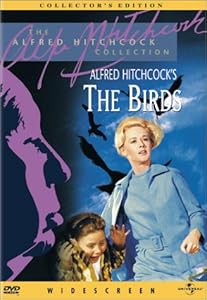


Has the Hitchcock Film, “The Birds”, Aged Well?

Herein, Tippi Hedren plays a practical joker who finds out, of course, that life is no joke.  The birds in Bodega Bay have gone insane, psychopathic, vicious.  Relationship problems pale in significance when the avian attacks begin.  One wonders why Tippi and Rod Taylor spend as much time outdoors as they do.

The BirdsAlfred Hitchcock’s 1963 offering, is a character-driven drama (consider the two women, Lydia and Annie, who fear abandonment) before the bird business heats up. . . Has the film aged well?  Sure.  The special effects no longer impress, if they ever did, but images and scene set-ups are still sobering and vivid.  The dead man at the farm, the gathering of crows on the playground jungle gym, the gasoline fire on Main Street—all brilliant.  In spite of a lot of poor acting—thank Heaven for Jessica TandyThe Birds is an almost-great horror flick.

Cover of "The Birds (Collector's Edition)...

Cover of The Birds (Collector’s Edition)

“The Umbrella Academy”: I Have Not Yet Enrolled

I have seen the first two episodes of the new Netflix series, The Umbrella Academy.  We need another visual narrative about X Men-like superheroes like we need Jussie Smollett giving campus lectures on the subject of hate crimes.  The action scenes have been fun, but the rest of the stuff is rather stale and sophomoric.  Plus, Ellen Page‘s acting has been indifferent, phoned-in.

Is “Born to Win” A Winner?

Directed by Ivan Passer, Born to Win (1971) presents us with J. (George Segal), a drug addict who considers himself . . . born to win, which actually means born to get the fix he needs.  Only he usually doesn’t.  What he does is fall in love with Parm (Karen Black), who immediately, strangely likes him and accepts him as he is.  They have a good time, but it’s without drugs and J. wants to score.  There is excess in the film in that too many bad things happen to J., and yet, to be sure, BTW asks:  Does the opposite of being “born to win” exist?

Another fault is that an episode of zany comedy fails to blend in with the film’s enjoyable drama.  Passer and David Scott Milton, however, wrought an original screenplay, and there is a load of fine acting.  Segal is at his thoughtful best, not at all miscast as a junkie.  Black is superbly convincing, and Jay Fletcher does an estimable job as J.’s black junkie friend.  Marcia Jean Kurtz  and Robert De Niro are gratifyingly realistic.  But Born to Win is a work of seriousness and certain artistry more than it is a truly good work.

Is “Born to Win” A Winner?

Directed by Ivan Passer, Born to Win (1971) presents us with J. (George Segal), a drug addict who considers himself . . . born to win, which actually means born to get the fix he needs.  Only he usually doesn’t.  What he does is fall in love with Parm (Karen Black), who immediately, strangely likes him and accepts him as he is.  They have a good time, but it’s without drugs and J. wants to score.  There is excess in the film in that too many bad things happen to J., and yet, to be sure, BTW asks:  Does the opposite of being “born to win” exist?

Another fault is that an episode of zany comedy fails to blend in with the film’s enjoyable drama.  Passer and David Scott Milton, however, wrought an original screenplay, and there is a load of fine acting.  Segal is at his thoughtful best, not at all miscast as a junkie.  Black is superbly convincing, and Jay Fletcher does an estimable job as J.’s black junkie friend.  Marcia Jean Kurtz  and Robert De Niro are gratifyingly realistic.  But Born to Win is a work of seriousness and certain artistry more than it is a truly good work.

Page 105 of 271

Powered by WordPress & Theme by Anders Norén