
Spike Lee‘s Jungle Fever (1991) is about an interracial illicit romance, and it’s an overwrought joke. Most, but not all, of the black characters here are estimable; including the less than believable architect, Flipper Purify (Wesley Snipes), who cheats on his wife with a white woman (Annabella Sciorra). Nearly every white character is foolish and/or mean. The best sequence in the film presents a group of black young women discussing black men and their relationships. In one of the worst sequences, several Italian-American dudes are blabbing hysterically and are like profane, monstrously racist Jersey Boys. The movie is stupid—with, however, a nifty credit sequence—and even features constantly inappropriate music.
Author: EarlD Page 13 of 317
Preston Sturges based his script for The Lady Eve (1941) on a story by one Monckton Hoffe and then directed what was one of the best screwball comedies ever made. In it, a father-and-daughter con artist team attempts to bamboozle a wealthy young snake expert (Henry Fonda) but, as it happens, a cynic, the daughter (Barbara Stanwyck), falls for a non-cynic, the young man. She never misses a beat. Imperturbably she aimed to cheat him at cards, now she imperturbably likes the fellow and says no to cheating him—except that he soon breaks up with her.
The old charmer, Sturges, is at it again—teasing us with hard reality before proving once more that he’s in a romantic mood. The hard reality is Stanwyck’s elaborate plot to—get even?—with Fonda, who does need to learn a little lesson.
Even more fun than The Great McGinty, Eve is a farce of manners, an unfrothy romp. Stanwyck is fine in her juicy role, but I like Sturges’s The Palm Beach Story a bit more because Claudette Colbert looks more feminine than Stanwyck.

The Lady Eve (Photo credit: Wikipedia)
The 1954 film noir, Pushover, was adapted from two stories by different authors and so, presumably, real credit must go to Roy Huggins for the smooth script. Here, Fred MacMurray is all right but certainly not great as a police detective whom a bank robber-murderer’s girlfriend (Kim Novack) talks into running off with her. Oh, and they’ll abscond with the bank robber’s stolen money. Novack is all short-haired glamor and has an intelligent-looking beautiful face. Her acting is menacingly cool.
I detected nothing wrong with Richard Quine‘s directing. The black-and-white visuals are glossy and thus attractive. The pic is sobering and involving.
A Kind of Loving (1962) may be British director John Schlesinger‘s best film; I don’t know. Cold Comfort Farm is good too, but Darling, Marathon Man and, probably, Midnight Cowboy (which I’ve resisted watching in full) don’t cut it. Loving, based on a novel, is an exquisitely wrought production in which Alan Bates stars as a working-class man who, because of her pregnancy, marries a girl (June Ritchie) whom he inconsistently cares for. For six months the marriage is miserable, but it’s primarily due to the couple’s having to live with the girl’s unpleasant mother (Thora Hird). The acting is superb. Aspiring thespians should study Bates for his range. Ritchie and Hird make the women flibbertigibbets but not just that. The look of the movie is enticing, with Schlesinger savvy at filming space—not outer space, just space—influenced perhaps by Antonioni.
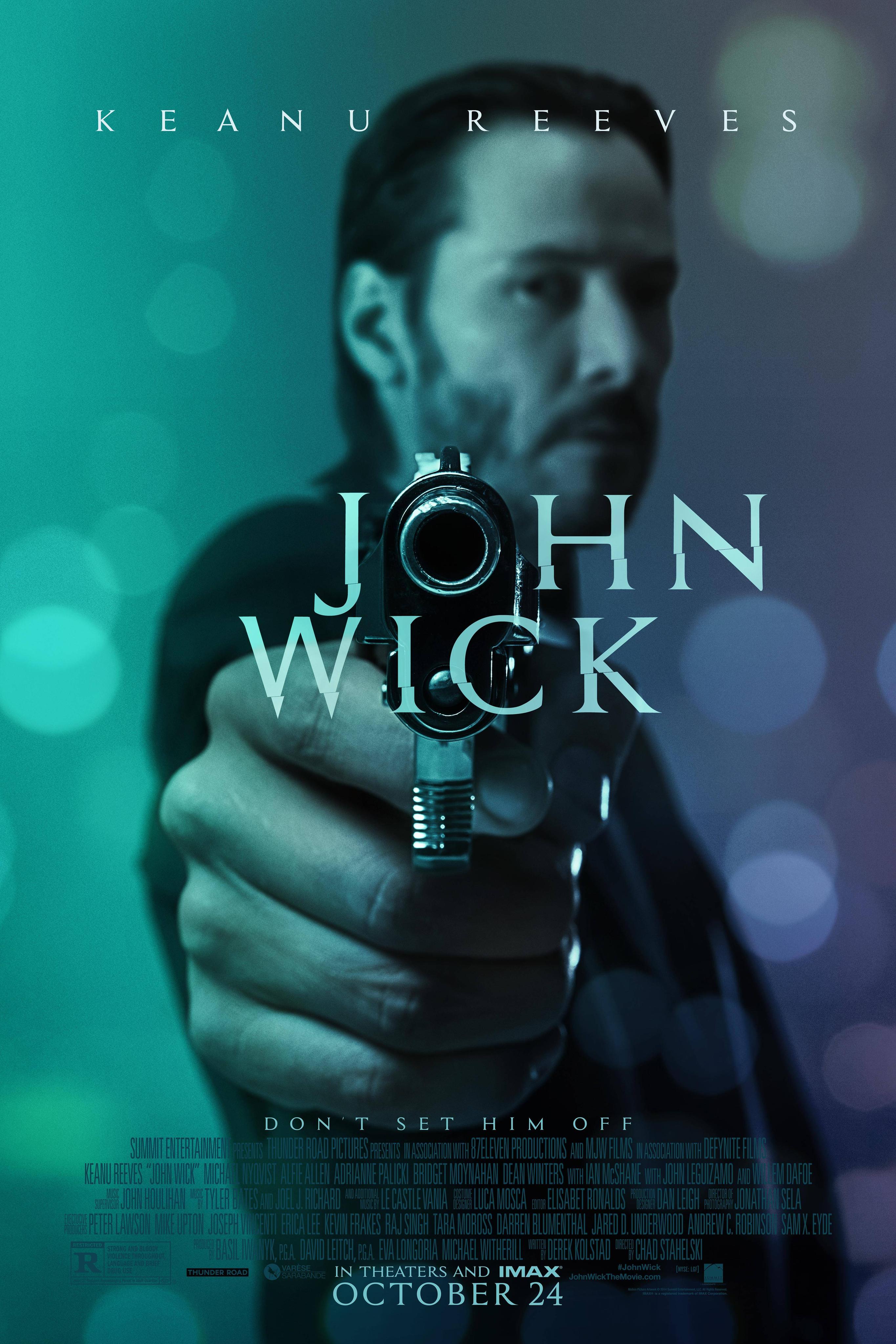 Russian criminals in America beat the excrement out of John Wick, a former hit man, kill his beagle puppy, and steal his car. But Wick is formidable; he arms himself (after all these years) and goes out to settle the score.
To me, an action movie nowadays needs to be fluid, non-arty and halfway-sensible or it will be no blasted good—and this is the kind John Wick (2014) is. Tidy, not at all sloppy are the direction of Chad Staheslki and the film editing of Elisabet Ronaldsdottier. . . As John Wick, though, Keanu Reeves moves well but is flat, while surprisingly Ian McShane seems out of kilter. But it matters little since this commercial flick, as John Nolte says on the Big Hollywood site, “knows exactly what it is and what it promises.”